The Fundamental Paradigm: Audience-Centric Retrieval
A persistent misconception among digital video creators is that the recommendation system operates on individual video files in isolation. In production machine learning environments, the recommendation infrastructure does not "push" videos to an audience; rather, it "pulls" candidate videos when an active user requests a feed. The algorithm does not serve the creator; it responds to individual viewer history, affinity graphs, session contexts, and immediate device intent.
Every time a user visits the homepage or nears the end of a video playback session, YouTube's system computes a candidate pool from billions of available videos. It reduces this massive index down to a few hundred candidates and then scores them based on expected utility. Understanding this operational reality shifts creator strategy from gaming search metadata to satisfying defined viewer segments.
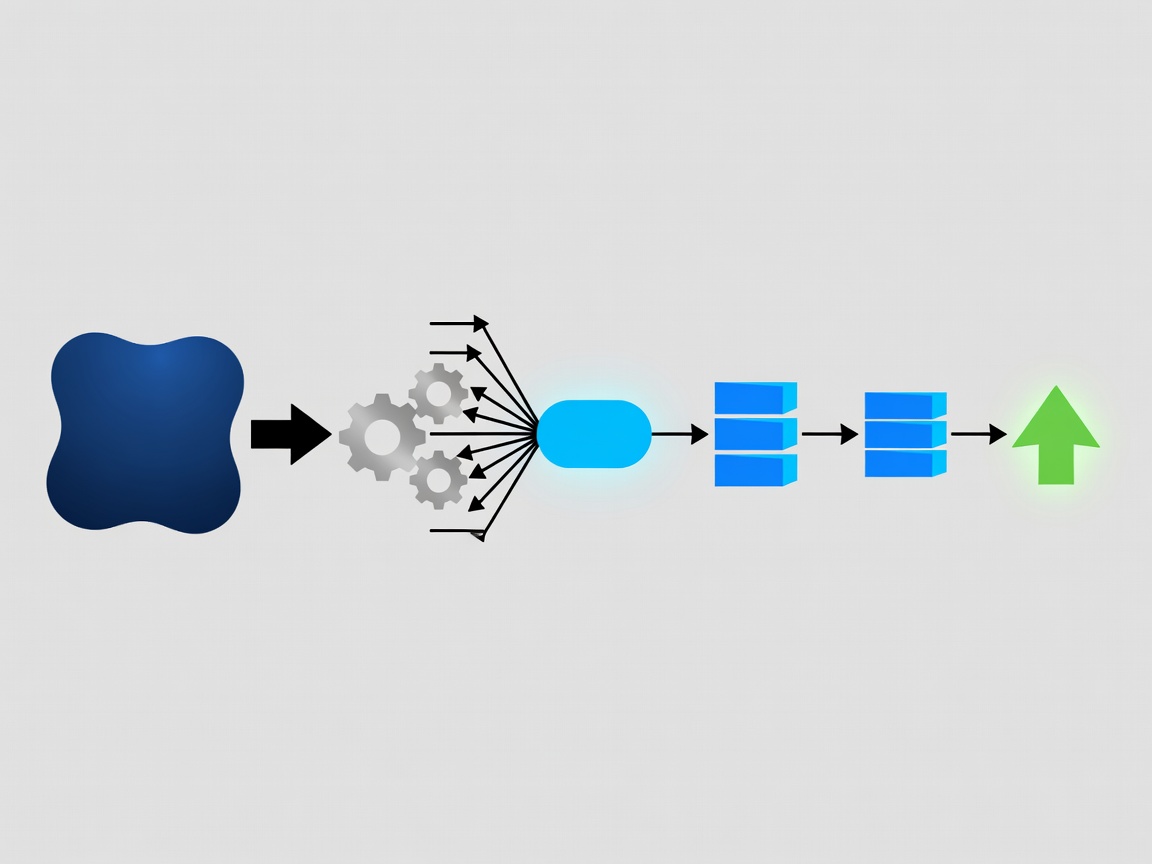
The Two-Stage Machine Learning Pipeline
YouTube's public research documentation reveals that its recommendation pipeline operates primarily in two distinct stages: Candidate Generation (Nomination) and Candidate Ranking.
1. Candidate Generation (Extreme Multiclass Classification)
With hundreds of millions of active uploads across the platform, running complex mathematical scoring functions against every single video in real time is computationally impossible. The candidate generation stage ingests the user's watch history, search tokens, demographics, and collaborative filtering clusters to narrow down the entire repository to hundreds of relevant videos.
At this stage, high view velocity among a creator's core audience signals topical freshness. If a user recently consumed three consecutive videos on economic history, the candidate generator surfaces videos that have been watched by other users sharing that specific behavioral pattern.
2. Deep Neural Ranking (Scoring and Weighting)
Once candidate items are retrieved, the ranking model scores each candidate asset to generate an ordered list. The scoring engine takes into account dozens of granular variables:
- Predicted Click Probability (pCTR): The historical likelihood that an impression shown to this demographic cohort converts into a watch event.
- Predicted Watch Time (pWT): The estimated duration the user will remain on the asset before navigating away.
- Viewer Satisfaction Vectors: Explicit signals (post-watch surveys, shares, positive comments) and negative implicit signals (quick-bounce clicks, "Don't recommend channel" inputs).
- Session Continuation Value: Whether the video encourages prolonged platform usage or causes immediate session termination.
Critical Algorithmic Insight
High CTR paired with low retention produces an immediate ranking penalty. If a video achieves a 14% CTR but an average view duration under 45 seconds, the neural ranker interprets the asset as misleading or dissatisfying. The candidate generator subsequently stops nominating it for wide browse distribution.
Browse Features vs. Suggested Videos vs. Search
Understanding the algorithmic surfaces is crucial for strategic channel positioning. Each surface prioritizes distinct metric signals.
| Surface Category | Primary Driver | Audience Mindset | Longevity Expectancy |
|---|---|---|---|
| Browse Features (Homepage) | Broad Topic Affinity & Recent Velocity | Passive browsing, exploratory | 3 to 21 Days (Sharp drop-off) |
| Suggested Videos (Sidebar / Up Next) | Topic Continuity & Co-watching Patterns | Engaged, in-session momentum | Months to Years (Compounding) |
| YouTube Search | Direct Query Intent & Search Relevance | Active solution/information seeking | 12 to 48 Months (High utility) |
Algorithmic Testing Cohorts
When a new video is published, the recommendation system does not blast it indiscriminately. It executes progressive cohort testing:
- Tier 1: Core Subscribers & Active Watchers: The initial 100–1,000 impressions are served to viewers who have actively engaged with the channel in the prior 30 days. Baseline CTR and percentage viewed are calculated here.
- Tier 2: Adjacent Affinity Audiences: If Tier 1 metrics surpass historical category averages, impressions expand to viewers who watch similar channels but have never visited the host channel.
- Tier 3: Broad Platform Browse: If Tier 2 maintains stable retention (typically above 45–50% average view duration), the asset is promoted to broad homepage browse shelves. At this stage, CTR naturally declines due to cold traffic exposure, but absolute impressions skyrocket.
Browse-Centric Growth Advantages
- Exponential view spikes within 48–72 hours.
- Rapid top-of-funnel subscriber acquisition.
- Massive brand visibility across relevant verticals.
Browse-Centric Growth Vulnerabilities
- Severe traffic volatility from week to week.
- Lower audience attachment and email conversion rates.
- Extreme sensitivity to minor thumbnail and title fatigue.
Key Tactical Takeaways for Channel Operators
Channels looking to align with algorithmic requirements should not chase external vanity metrics or artificial engagement groups. Instead, focus on minimizing friction in the first 30 seconds of content, aligning thumbnail promises strictly with opening scenes, and building topical clusters that encourage sequential viewing sessions. When the algorithm identifies that your video consistently leads to an additional video view, your distribution floor rises permanently.